
I wantses ... something
When I offer to make a quilt for someone, the first response is often unintentional panic. You suspect you have opinions, but you don't know what you want, and you don't know what to ask for. You probably don't know names of quilt patterns. You know what you like, but you don't know how to articulate it.
That's totally ok. That's how we start.
The parts
A typical quilt has three layers, like a sandwich: the top, the batting, and the backing. You see the top and the backing, and the top is usually the one with the intricate piecework. The batting is the fluffy stuff in the middle that traps air and makes a quilt warm. Once the three layers are stretched out over each other, you take your sewing machine** and do patterns of stitching over the three layers to attach them to each other. Once you've done that, you've got to cut away the excess around the sides, like this, to clean up the edges:
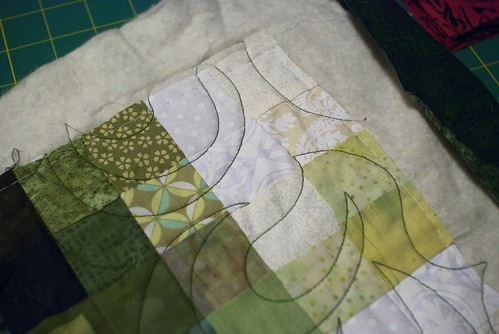 How it comes back from the quilter's
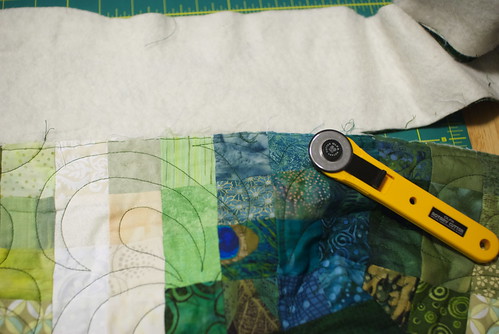 Free at last! Free at last!
** Some people do this by hand. I don't. I'm not that crazy.
But that leaves the edges open and raw. That's not ok. Next I cut out a very long and thin strip of fabric, called the 'binding.' I sew it first, by machine, to the front of the quilt...
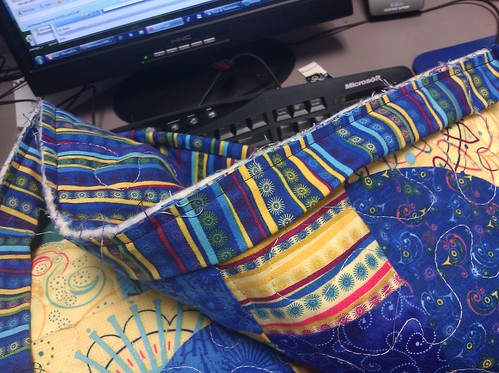
and then hand-sew the other side invisibly to the back, to close off that open edge. It can either match the fabric near it, accent it, or contrast against it:
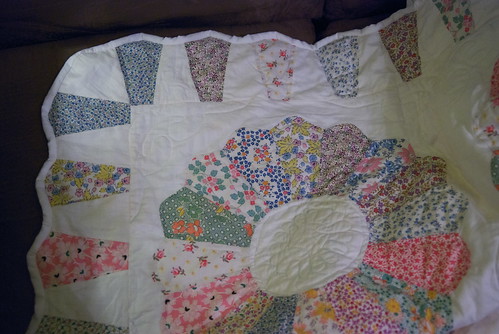 Binding example
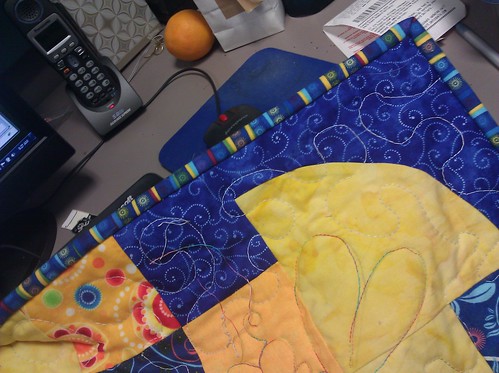 How the binding finishes
 Tenzing, Amy, and a quilt
More about the quilting!
The word 'quilting' is deceiving, because it can mean one of two things. If you're being totally strict, it should only refer to the stitching that runs through all three layers of the quilt to hold it together (as opposed to just 'sewing,' which is what you're doing when you're assembling a quilt top). In this strict sense, the quilting does indeed make a difference to the finished quilt. You have color choices here, too! You can choose a thread that blends into your fabric, or one that contrasts strongly.
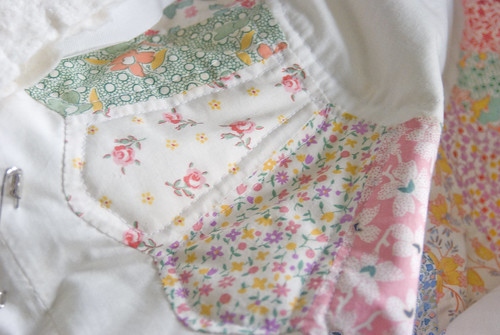 Morning after? No hangover.
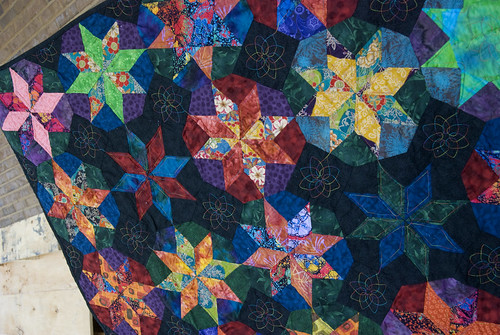 Slant shot into the goal
I can also choose how dense the stitching can be. There are tradeoffs, of course: a more densely quilted piece will be stronger, sturdier, and last longer -- but it won't be as soft. A more loosely-quilted quilt will feel immediately softer, but may need to be treated with more care decades down the line. I quilted the hexagon quilt pretty closely (about 1" apart) because the fabrics were antiques, and I wanted to provide those fabrics as much stability as possible. I quilted Crayon Box a bit more loosely because I wasn't quite so worried about it.
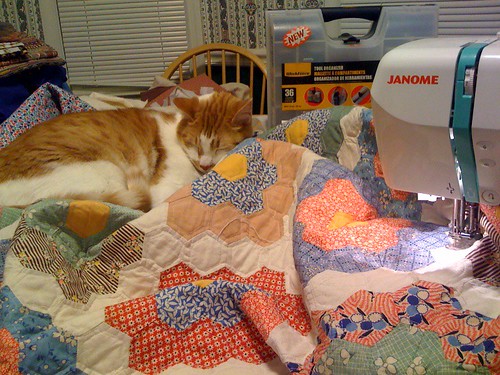 Not sure who is winning but I don't think it is me
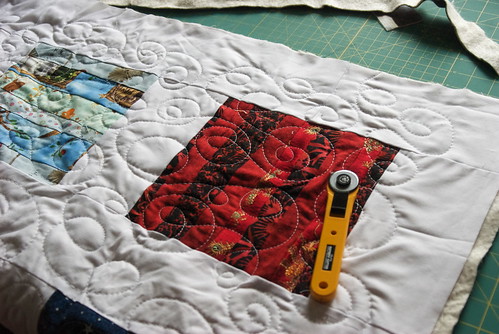 Detail: quilting patterns
I try to make all my quilts machine washable. You'll notice that all of these quilts have a nice, smooth top to them; when you wash them for the first time, the batting contracts about 3%, giving you that crinkled look that most people associate with quilts.
Backings on-hand
I always keep a few large swaths of fabric on-hand for backings. They're usually notable for one reason or another:
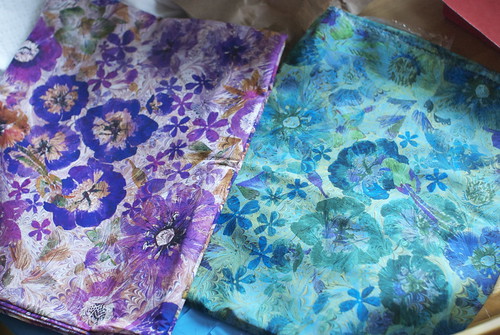 Flickr Flickr Widdas Waltz, purple only. Liberty fabric. (British) |
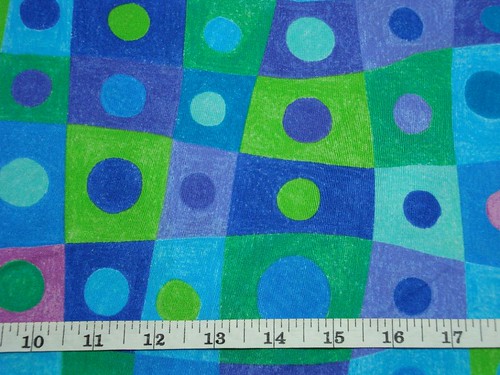 Flickr Flickr Keiko Goke's "Circle In Square." I have it in this blue, and the warm-toned multicolor. (Japanese) |
 Flickr Flickr Alexander Henry's "Villette." (USA) |
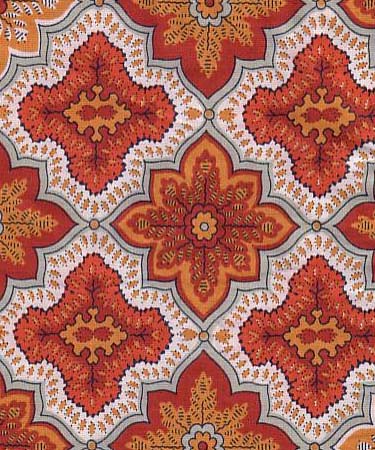 Flickr Flickr Souleiado's "Le Jehangi" (French) |
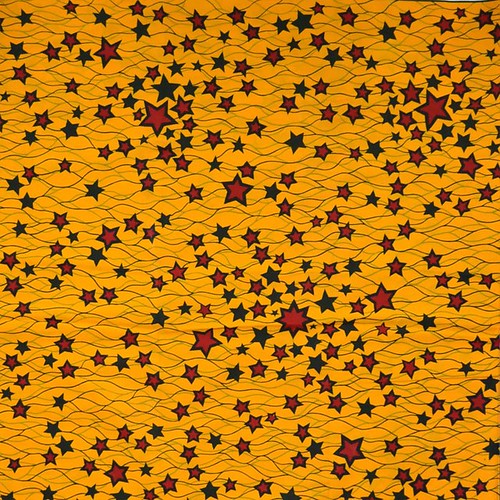 Flickr Flickr Small Star, Vlisco (Dutch / African) |
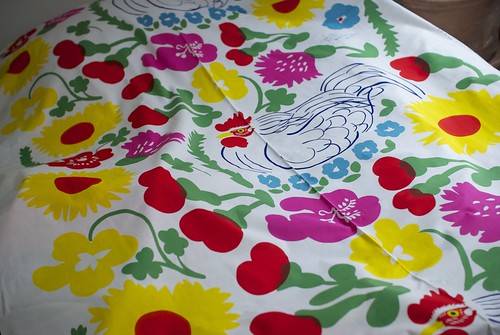 Flickr Flickr Charles, Marimekko (bought in Denmark) |
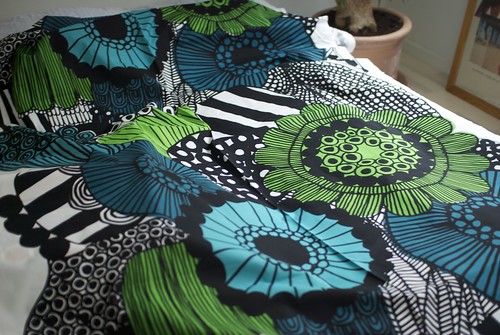 Flickr Flickr Siirtolapuutarha, Marimekko (bought in Denmark) |
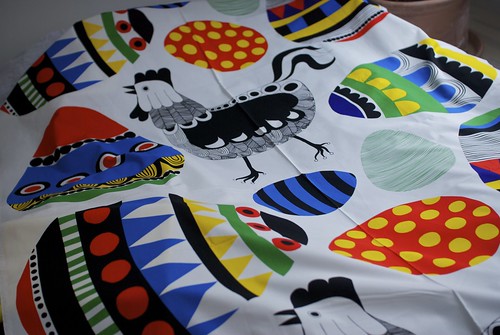 Flickr Flickr Rairai, Marimekko (bought in Denmark) |
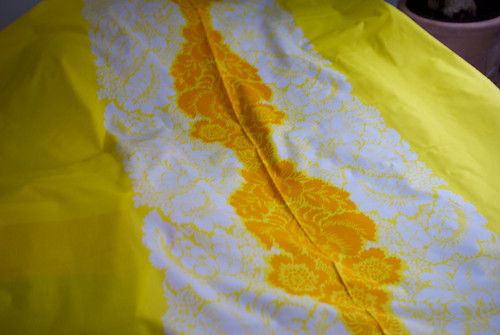 Flickr Flickr Ananas, Marimekko (bought in Denmark) |
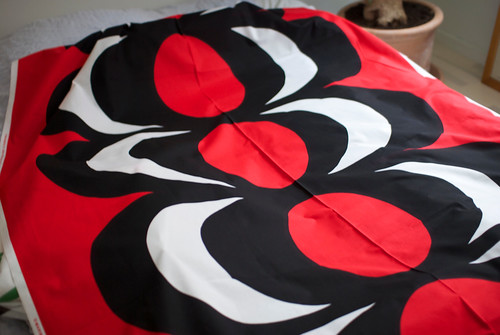 Flickr Flickr Kaivo, Marimekko (bought in Denmark) |
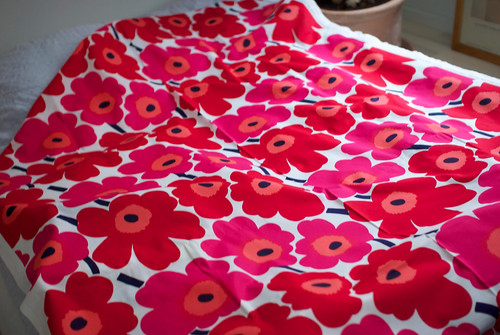 Flickr Flickr Pieni Unikko II, Marimekko (bought in Denmark) |
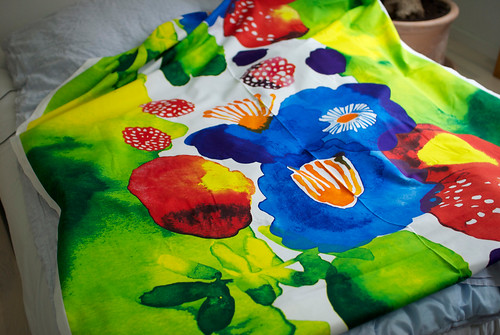 Flickr Flickr Juhannustaika, Marimekko (bought in Denmark) |
|
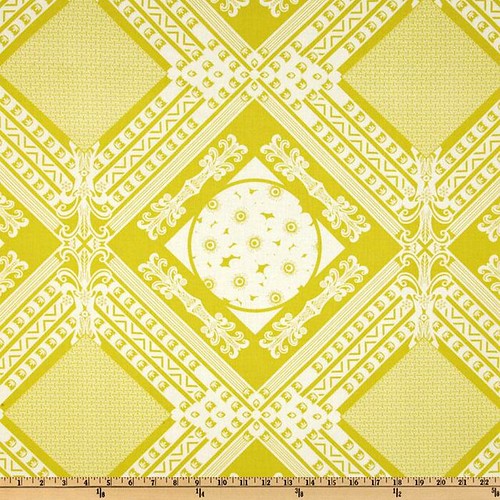
Framed, by Anna Maria Horner (USA)
|
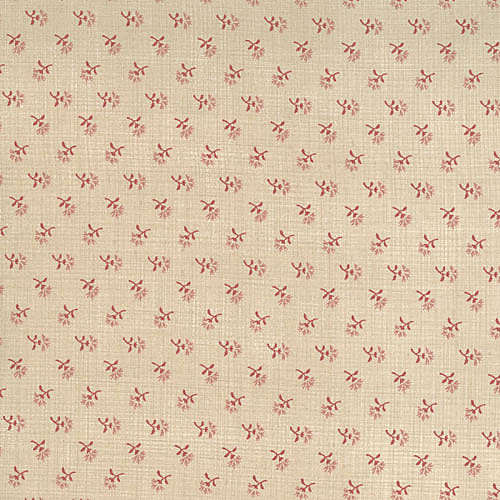 Flickr Flickr Rouenneries Deux, "oyster" color (USA / France) |
Old or new?
Do you like rescued antiques or do you want something new? There's no right or wrong answer here. Some people love the idea of salvaging an old quilt, but some have specific color/pattern wishes that can't be satisfied by anything but an original. Both are totally okay!
Got a time period you love?
If you want something that looks very old, but don't know quite what you want, visit reproductionfabrics.com and poke around. This section isn't intended to be a definitive What Quilts Were Like At This Time reference but instead give you some guidelines.
[define time periods, provide examples]
Got a design you love?
These are some designs I have templates for, and feel comfortable tackling again.
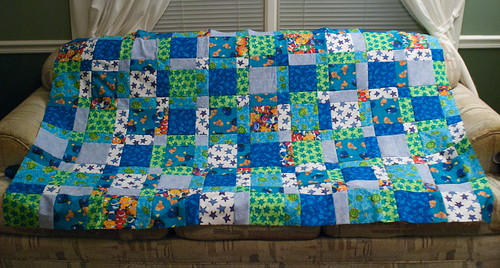 Flickr Flickr Disappearing 4-patch |
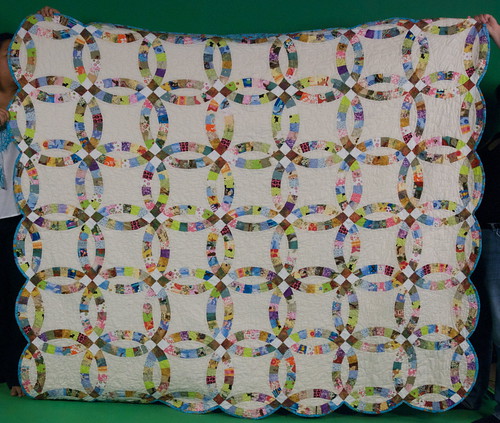 Flickr Flickr Double Wedding Ring |
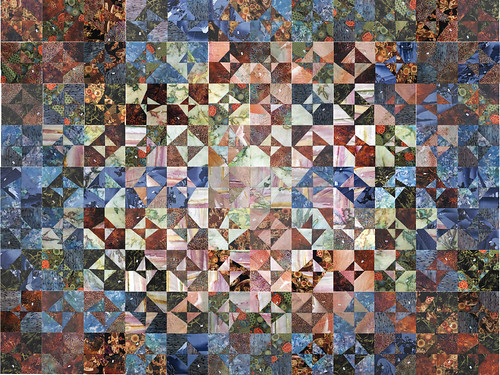 Flickr Flickr Broken Dishes |
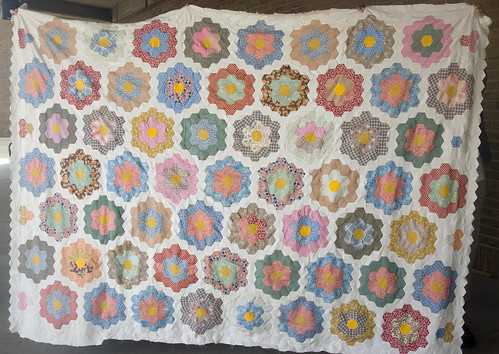 Flickr Flickr Grandmother's Flower Garden |
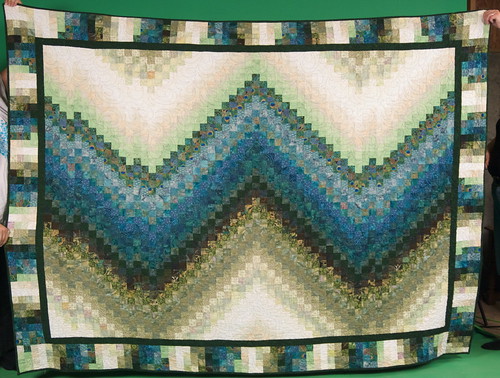 Flickr Flickr Bargello |
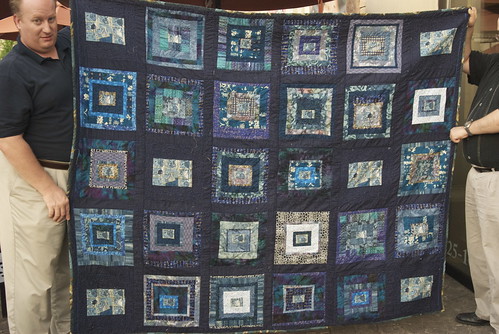 Flickr Flickr Log Cabin, squares, and other variations |
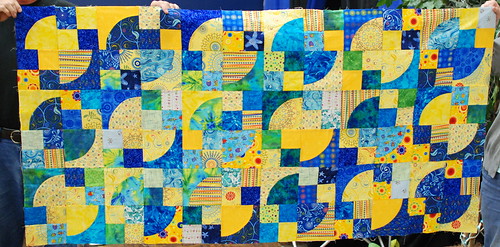 Flickr Flickr Drunkard's Path and other circle variations |
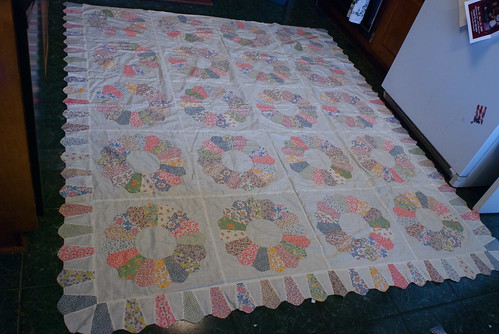 Flickr Flickr Dresden Plate |
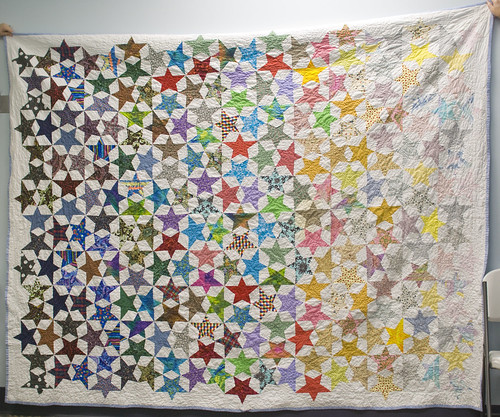 Flickr Flickr Rotating stars |
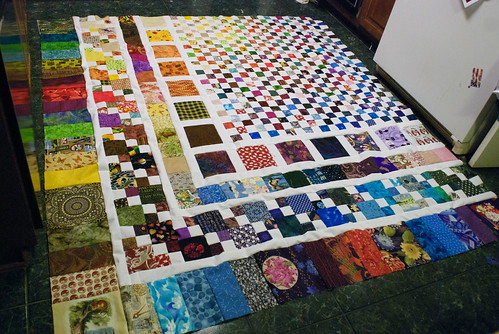 Flickr Flickr Bricks and Stones |
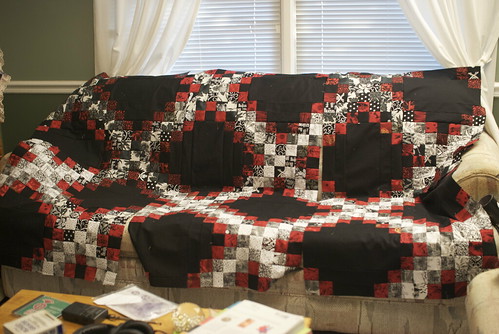 Flickr Flickr Irish Chain |
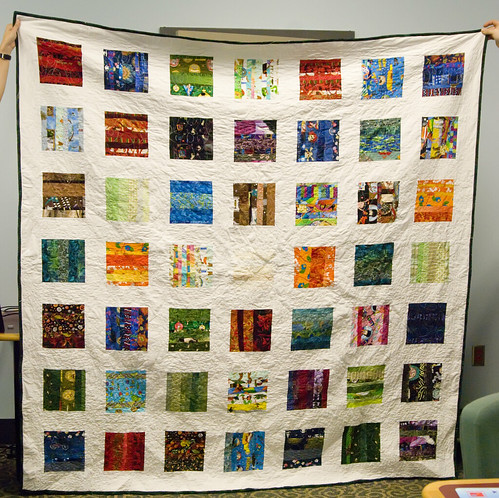 Flickr Flickr Scrap salvage |
 Flickr Flickr Ribbon Star |
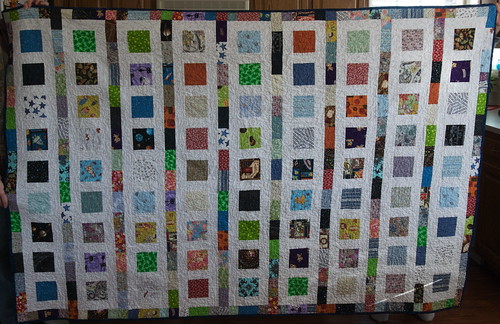 Flickr Flickr Squares and rectangles |
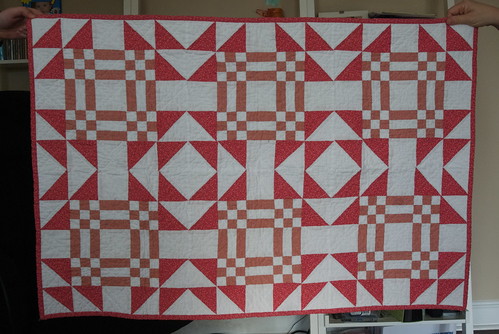 Flickr Flickr Classic piecework |
 Flickr Flickr Simple strips |
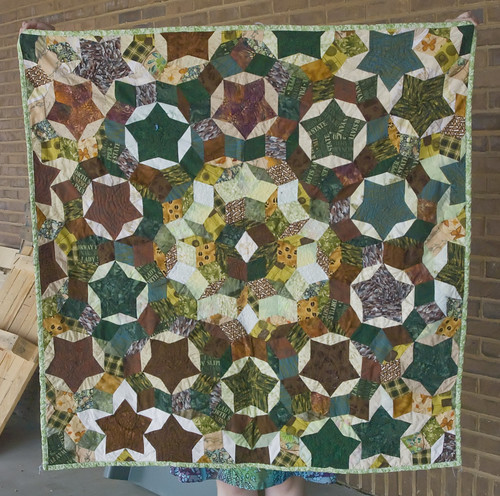 Flickr Flickr Mathematical tilings |
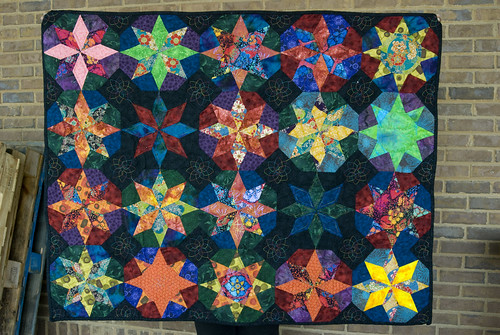 Flickr Flickr Custom adaptations from something you love |
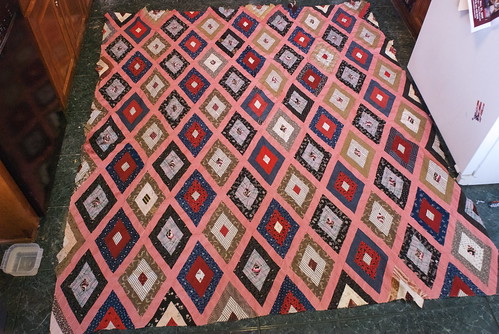 Flickr Flickr Restoration / completion of found antiques |
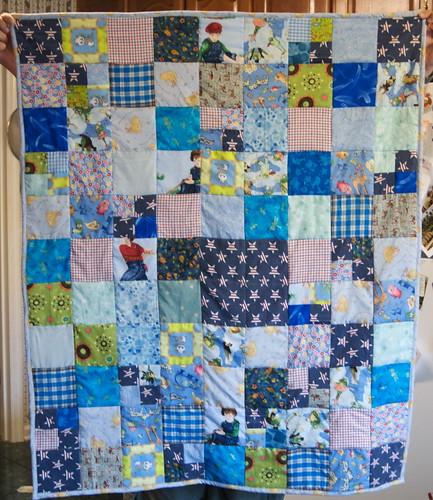 Flickr Flickr Recycling items with sentimental value |
|
New Wave
|
 Flickr Flickr Simple squares |
Flickr Classic blocks |
Mod Mosaic
|
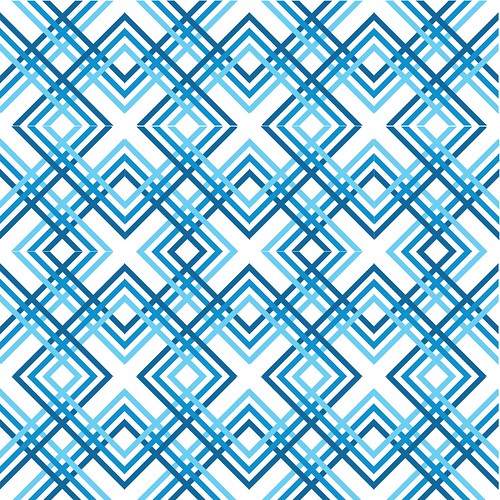 Flickr Flickr Carpenter's Square |
 Flickr Flickr Hirschhorn tiling |
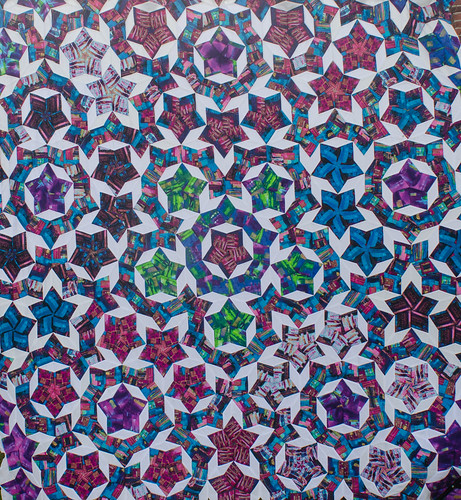 Flickr Flickr Penrose tiling |
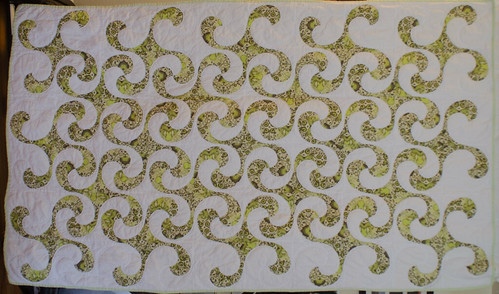 Flickr Flickr Swirl |
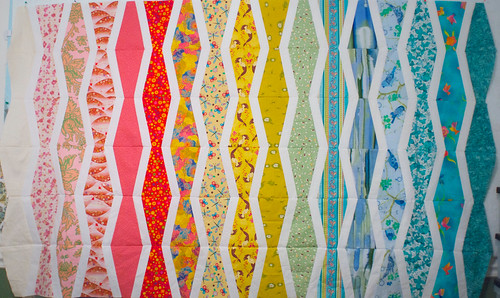
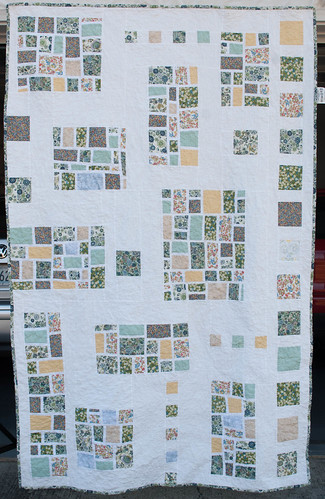
Things I haven't tried yet
I've seen so many fabulous things that I haven't gotten to attempt yet. I have a few in mind that I've wanted to tackle, but I just haven't found the right recipient or the right fabric yet.
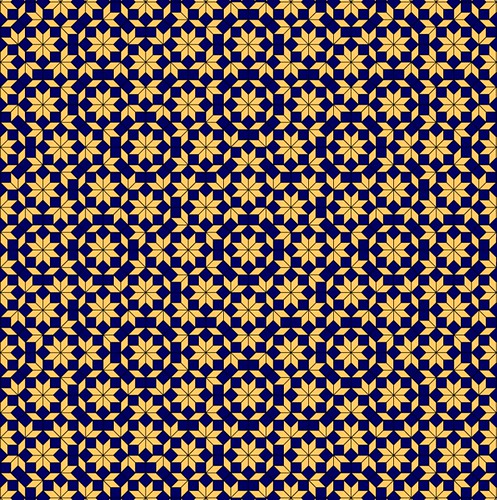 Flickr Flickr Ammann-Beenker tiling |
 Flickr Flickr Shield tiling |
 Flickr Flickr Socolar tiling |
Make it personal
if I'm going to do this, I'd rather tailor it to your interests. Don't assume I know. The quilt fabric world has a lot of crazy stuff in it. Here are some ideas:
- old clothing with sentimental value (preferably cotton, but I can work with poly-cotton blends) to be cut up
- Color scheme? bright colors? dark and intense colors? pastels? scrappy and random? a specific color combination?
- Do you like things that look old, or things that look modern?
- Any particular ethnic style that appeals? Some options: French country (soft reds and tans), Japanese, Chinese, Scandinavian, Russian, African wax batiks, Southwestern
- Do mathematical tiling quilts appeal?
- Favorites: sports team, color, cartoon character, city, movie, TV shows, holiday, hobby?
- Flowing curves, straight lines, or something else?
Lastly, a word about Felis catus
Quilt cat #1: Tenzing was my quilt buddy ... whether I liked it or not. Edmund didn't give a toss about snuggling on quilts, but every single quilt I worked on during his life was 'pre-loved' by Tenzing. This is also why I wash every quilt I do -- at least once, sometimes twice or more -- to make sure there are no issues. If you or anyone in your household are cat-allergic, let me know and I'll take extra precautions to keep my 'helper' off of your quilt. If you are severely allergic, I'll wash your quilt twice and then take it to the dry cleaner's immediately before sending it to you, just to be sure that you won't have a reaction. Here's why:
!['I don't care if you're fixing popped seams. I'm trying to SLEEP here, woman. Don't you understand I'm a geriatric rat bastard of a cat and I can sleep wherever I want?'
'Move, Tenzing.'
[indignant meowing]](https://farm5.static.flickr.com/4045/4701310035_934e7f712c.jpg "'I don't care if you're fixing popped seams. I'm trying to SLEEP here, woman. Don't you understand I'm a geriatric rat bastard of a cat and I can sleep wherever I want?'
'Move, Tenzing.'
[indignant meowing]") Mine, mine, mine. Mine. Mine? MINE!
Mine, mine, mine. Mine. Mine? MINE!
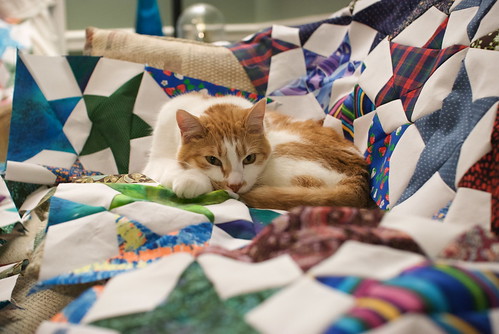 Quilt sprint, night #4: quilt kittens
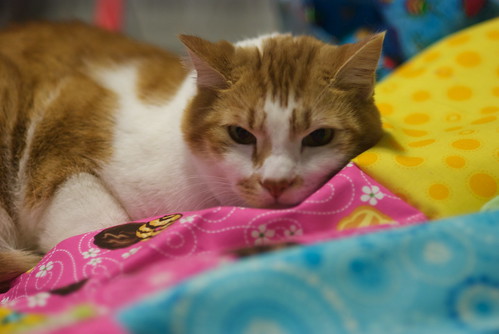 Thanks, Tenz.
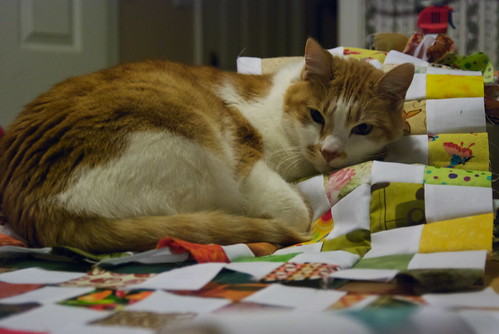 I'm practicing, Mom.
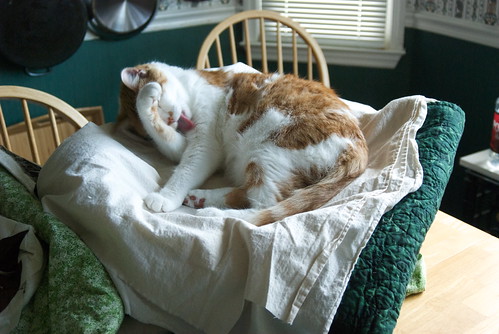 Compromise is the key to not killing your cat.
Mine, mine, mine. Mine. Mine? MINE!
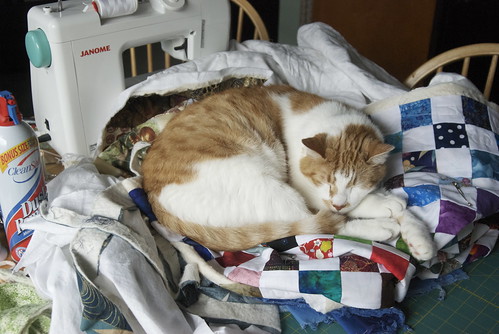 You may bind it when I wake up
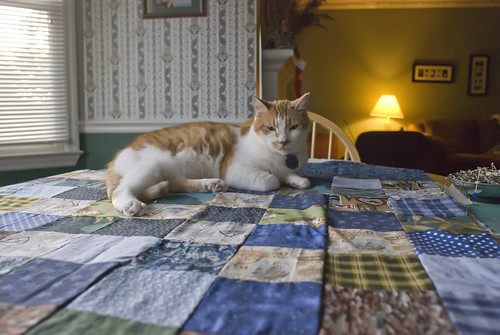 Ironically enough, this one's ACTUALLY his.
 A great reason to keep spare batting
Not sure who is winning but I don't think it is me
 We're professionals. Don't try this at home.
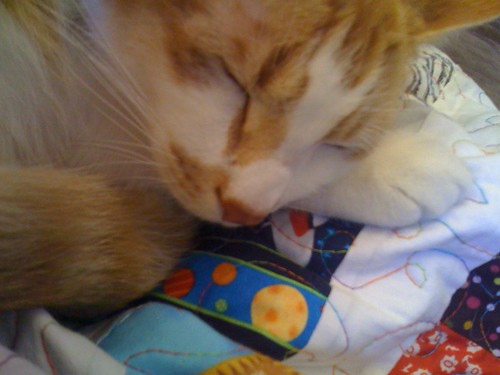 Forget previous photo. Am now officially dead of kitty cute.
 The 'pre-loved' stage
Tenzing, Amy, and a quilt
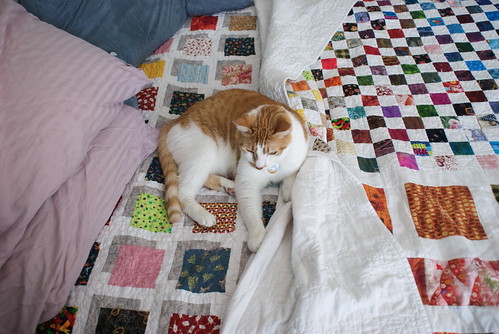 As far as *I* am concerned, the bed is made
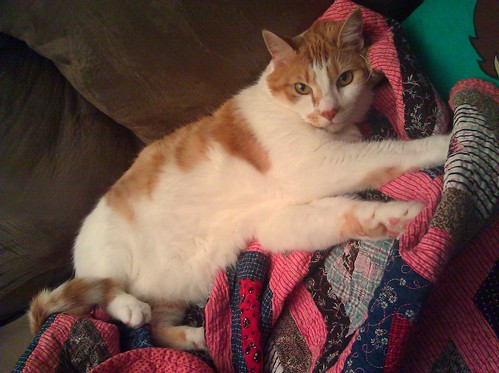 Mine. You cannot haz.
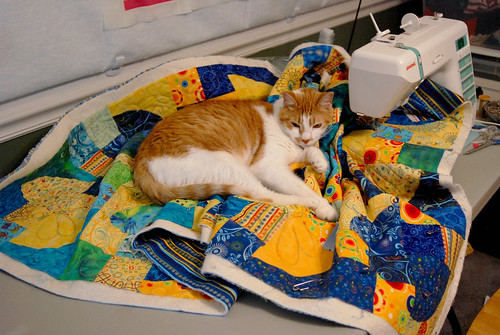 Recovering from the loss of the LAST quilt
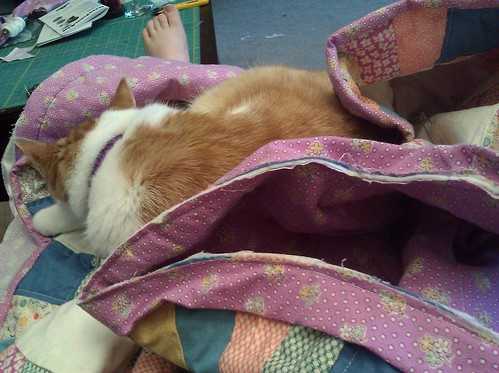 Some things remain the same.
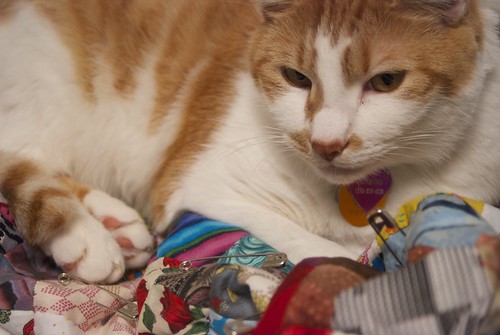 Sew to the paws, then stop.
 Error-checking Scarlet
 Look, just don't sew and we'll both be happy
 If you move it, I'm going to move with it.
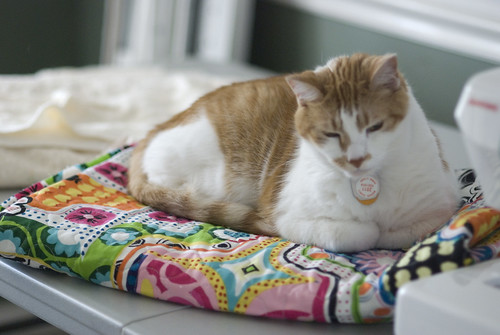 I'm on to you, Mom.
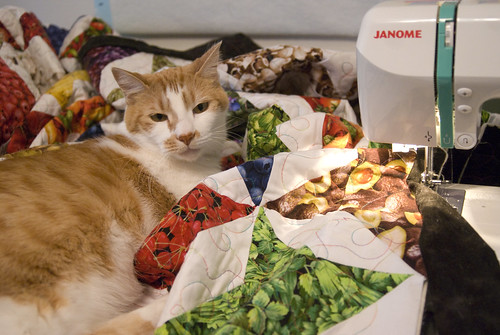 Benign overseer
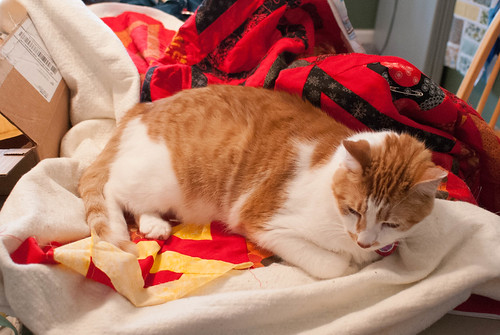 Tenzing helping Fuego be quilted
 Mine. You cannot have.
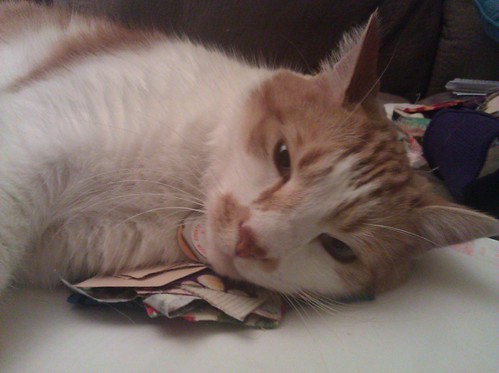 Lemme 'splain.
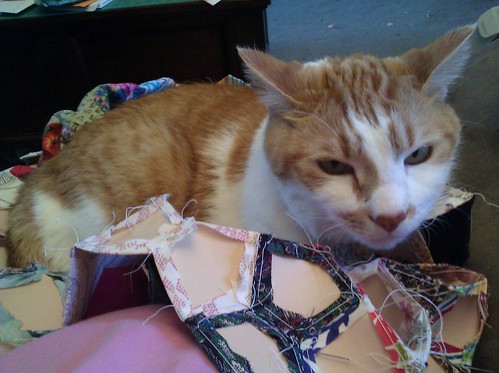 I snuggle now. Stop whining.
 Snoozy.
Quilt cat #2: Kolohe is calmer. Kind of. He's far less insistent than Tenzing was, but he's a sneaky little brat. He waits until I go to work, and then nests in my fabric. Cats are real jerks sometimes.
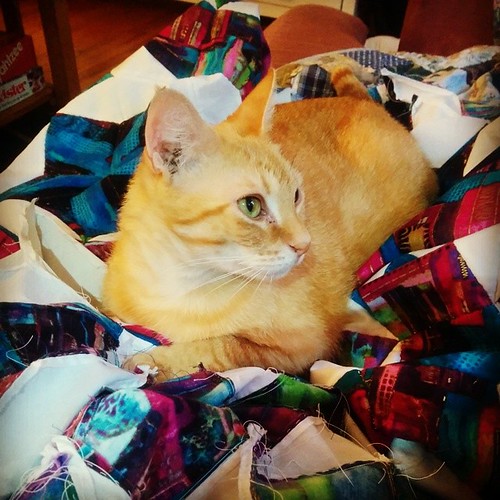 The vacant position of #Quilt #Cat has been filled.
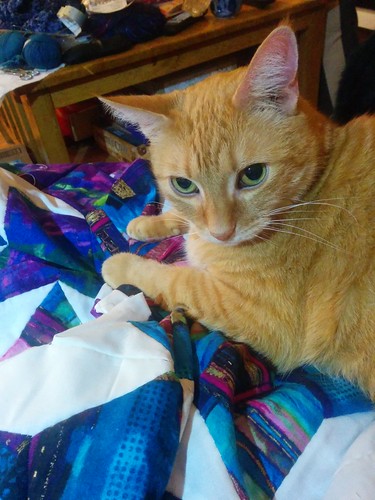 Flickr
 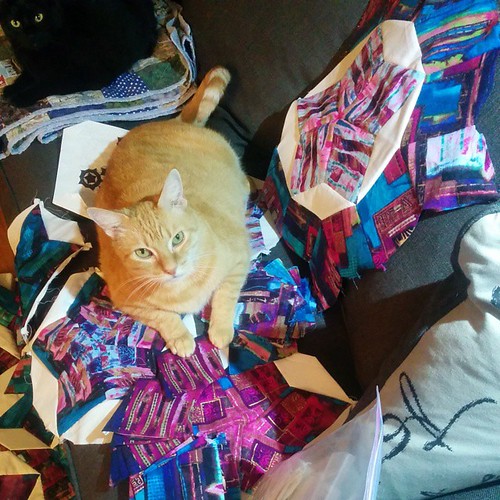 #Quilt #cat.
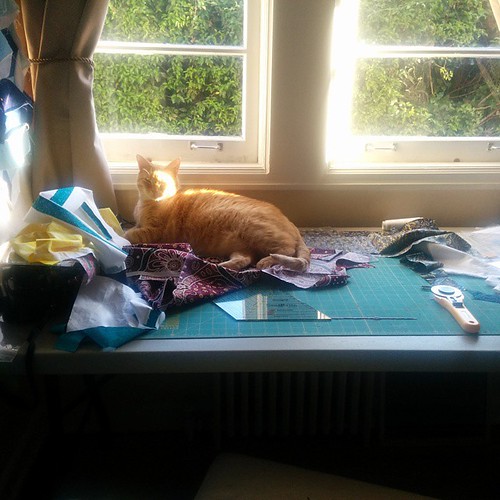 Mom calls me her 'bad tabby' and laughs to herself every time I do this. #cats #sewing